


Beyond History Textbooks: The Transformative Experience of a Canadian Battlefields Tour
December 17, 2025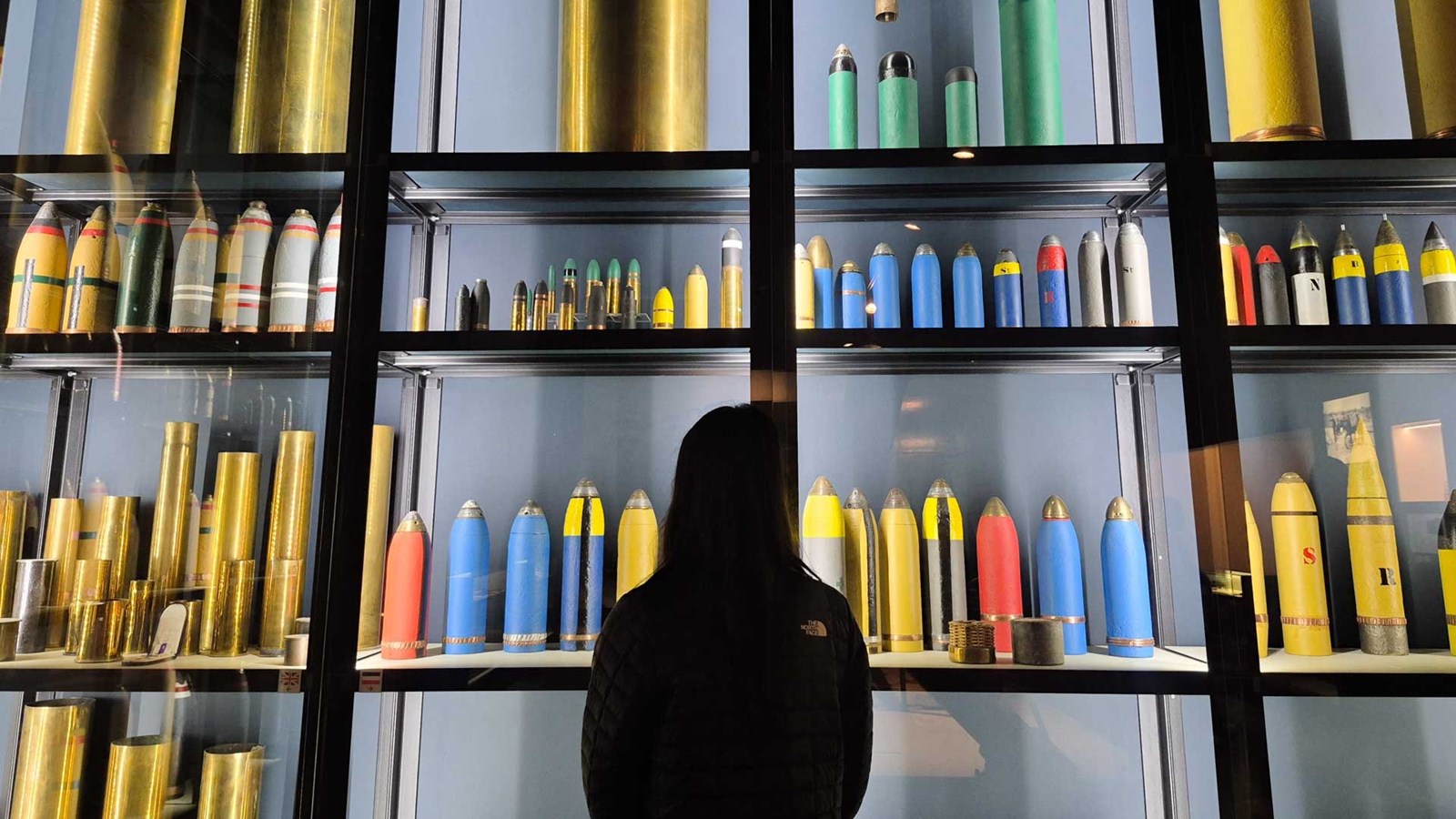
History is identity. It helps us see today’s world as the result of yesterday’s choices, where themes like human rights, diversity, and inclusion often sit at the heart of historic conflicts. Few subjects teach students more clearly, and more powerfully, what happens when those themes are lost than the stories of war.
With support from the province’s Education and Early Childhood Learning department, a group of Grade 11 and 12 WSD students recently spent 10 days exploring historic Canadian battlefields across Europe. For many, it was the first time they stepped into the places they had only read about. Among them were nine students from Collège Churchill High School, Gordon Bell High School, and Sisler High School, who visited Canadian battlefields and paid tribute to the sacrifice of Canadian soldiers.
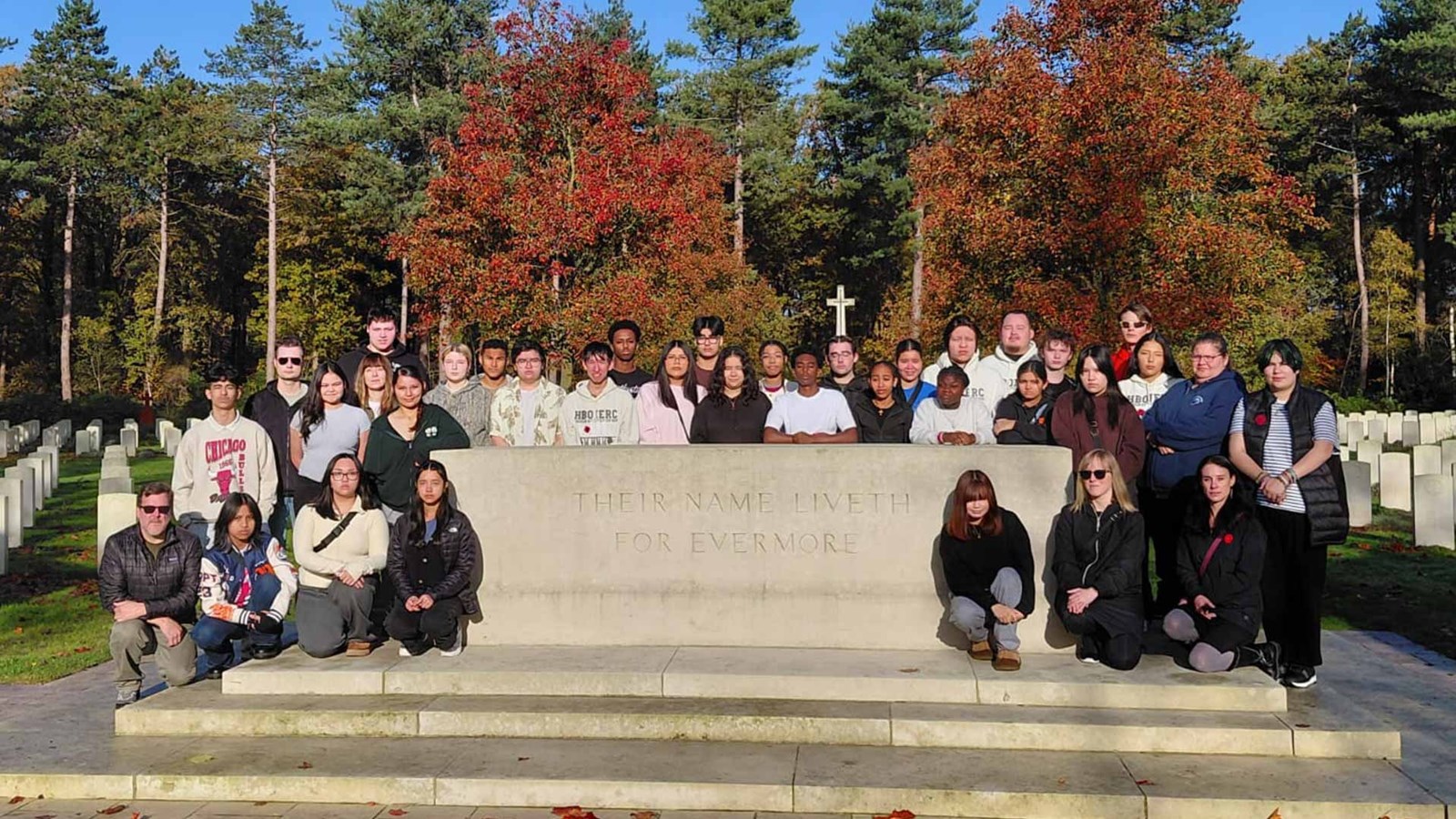
How does it feel to see history unfolded in real life? How do perspectives change when students stand in those spaces? How does art help capture and process those powerful emotions?
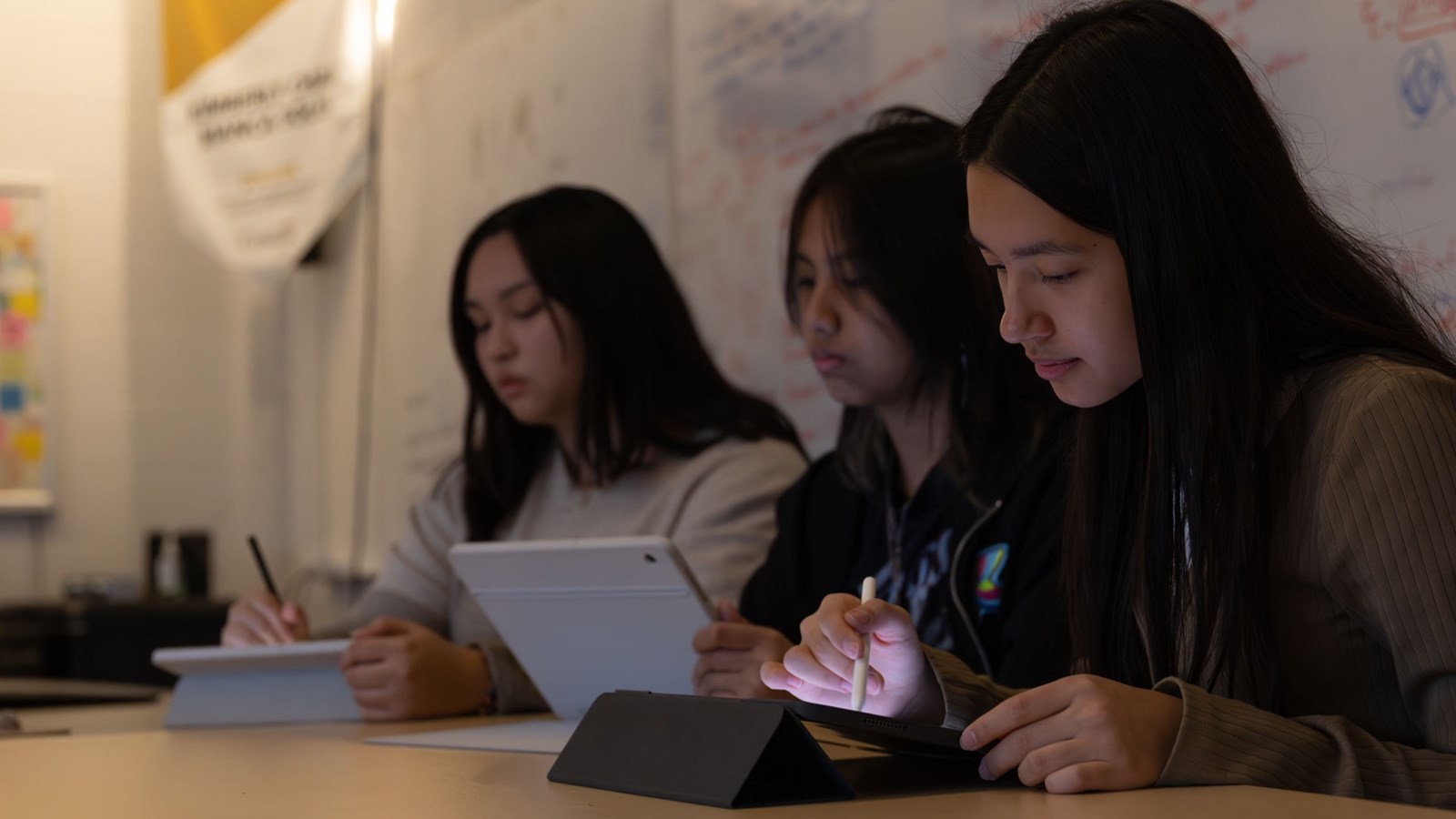
Trisha B., Elizabeth M., and Jamella H., students from Sisler’s CREATE program, have been reflecting on these questions since returning from their tour.
Beyond a School Lesson
For the students, the experience’s impact began with the sites themselves. Juno Beach, John McCrae medical bunker, and Essex Farm Cemetery, were especially powerful. Elizabeth described the entire experience as “incredibly emotional and life changing.” For her, it shifted her perspective on war and deepened her commitment to empathy.
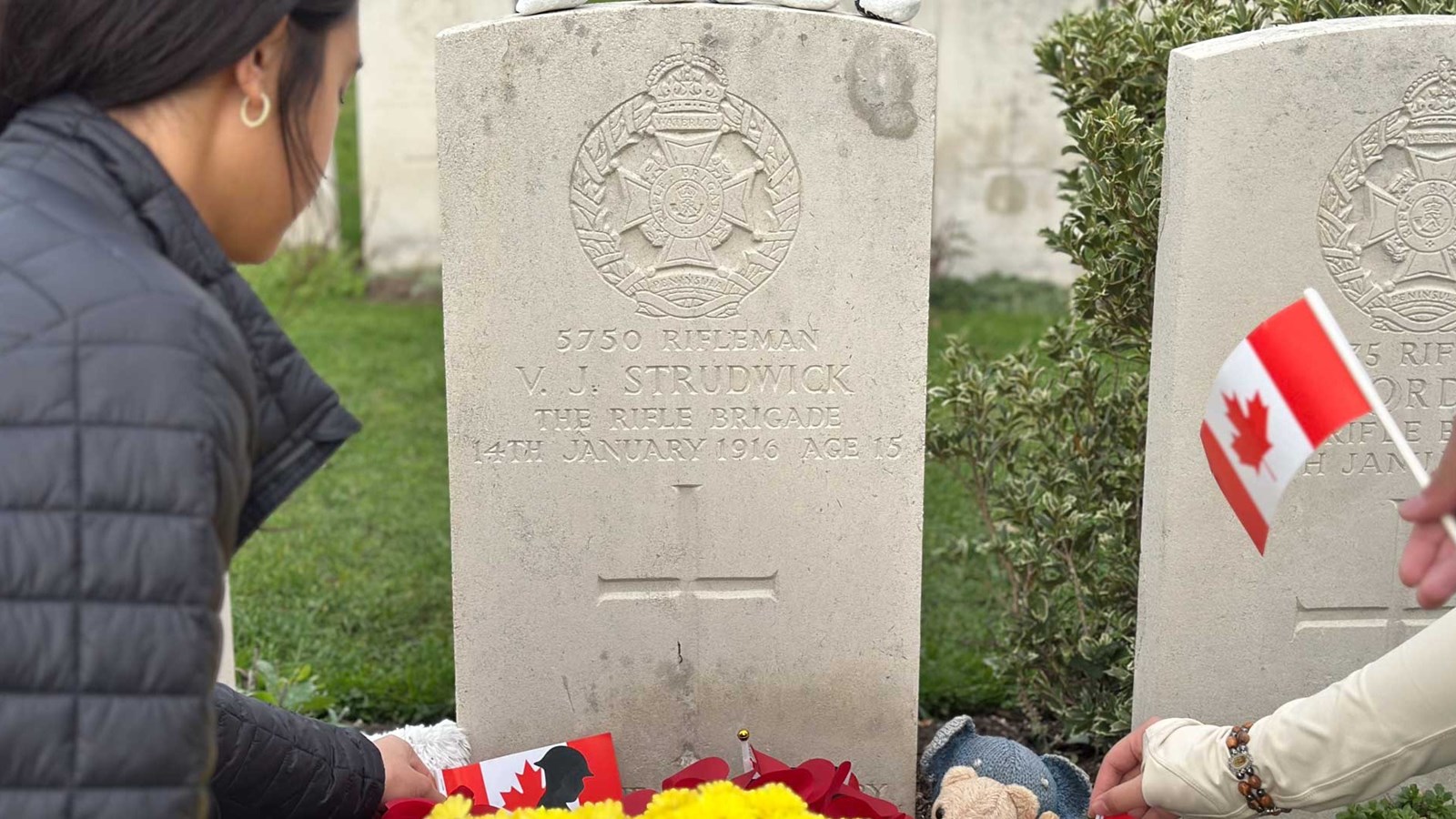 Standing before the grave of a 15-year-old soldier, Valentine Joe Strudwick, Elizabeth said it made the tragedy of war “sink in” in a way no textbook ever had. “Such terrible things should never be experienced by anyone, especially young kids. He fought to protect his loved ones.”
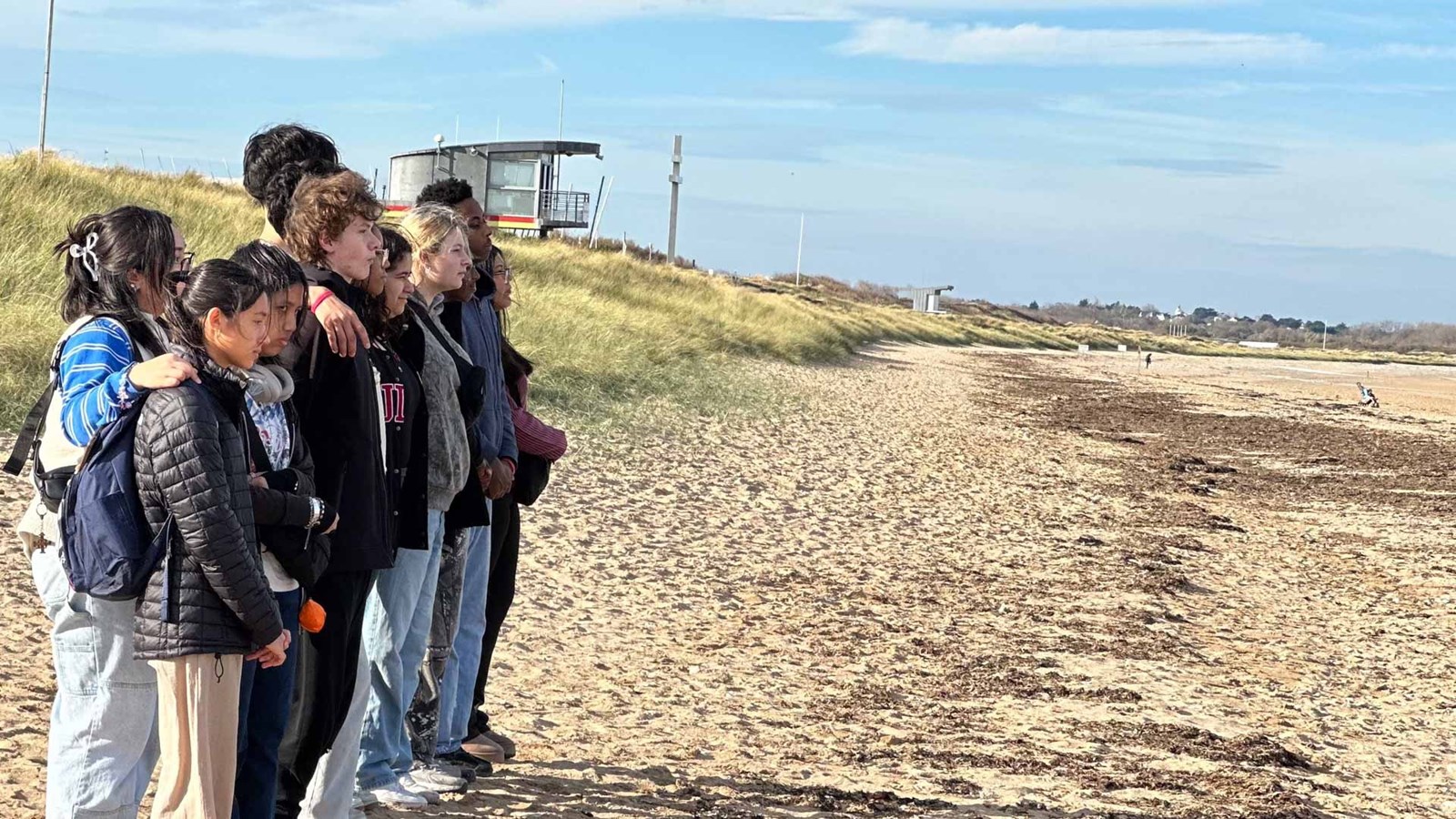
For Trisha, seeing the landscapes of Juno and Omaha Beach in person made her think about the contrast of the peaceful beauty today and the history of war. “Seeing the beaches in real life is nothing compared to reading about them or seeing photos of them. When you read the words ‘30 metres’ sounds short, but when you see the distance in real life, you will realise it is a much longer distance”
 Jamella recalls the Deportation Centre in Amsterdam as the most emotionally intense part of the tour. She describes it as a place once full of “happiness and fond memories” that was turned into a threshold to unimaginable suffering. For her, this trip was a unique an opportunity to “broaden the understanding of our history and think about the tragedies that occurred during these times”.
The emotional load of the experience stayed with the students well beyond each visit. Jamella noted that the trip made learning history “so much more personal,” while Trisha shared how the heaviness of the subject matter required time and conversation to process.
However, traveling together made all the difference. “Being able to travel and learn about these topics with two friends made the experience so much more meaningful,” Trisha said. Elizabeth added that sharing reflections at the end of each day helped them “really learn more” from the difficult stories they were encountering.
-2.jpg "Trisha Elizabeth Jamella Sisler Create students WSD Canadian Battlefield tour")
Turning Emotion into Art
Those emotions, and the responsibility that comes with remembrance, are now guiding the students as they begin their next project. While early in development, the trio hopes to create an artistic interpretation of what they witnessed: not a one-to-one re-creation of each location but work that showcases how they felt learning the stories from the battlefields.
Accuracy, respect, and emotional truth will guide the process. As their CREATE teacher Jamie LeDuc shared, the students aim to use their technical skills to highlight “the importance of what they experienced” through an animated short or animatic. “The artistic process is a challenging one, because coming up with a concept is one thing, and then executing that concept is a completely different thing”, he added. However, he is confident they’ll create something amazing.
For these students, the Canadian Battlefields Tour was more than a history lesson, it was an encounter with humanity, memory, and the cost of conflict. By walking the same ground and hearing the stories firsthand, they gained a deeper understanding of why history matters and how the lessons of Canada’s past must continue to shape the country of our future.
Photo credits: Jamie LeDuc,Trisha B., Elizabeth M., and Jamella H.