


Celebrating Communication: AAC Awareness Day at Robertson School
December 11, 2025 News Story
Communication is a right for every child, but it doesn’t always look the same for everyone. That’s why Augmentative and Alternative Communication (AAC) plays such an important role in our classrooms at WSD.
AAC is a system of tools and strategies that support or replace spoken communication to ensure every student has a way to express themselves. For schools like Robertson, AAC Awareness Day offers a meaningful opportunity to highlight these tools, spark curiosity, and strengthen a culture of inclusion.
Sunny Giesbrecht and Kristina Ostermann, AAC consultants for Winnipeg School Division, recalled how a few years ago, a group of Speech-Language Pathologists (SLPs) organized AAC Awareness Days as a fun and meaningful way to teach the entire school community about alternate communication needs.
Now these workshops are run by Speech Language Pathologists from WSD Student-Centred Services, collaborating with Learning Support Teachers (LSTs) and Student-Centred Services (SCS) Teachers.
SLP Janel Bortoluzzi explains that the purpose of these awareness days is simple: students communicate in different ways, and these events help show that every form of communication is valued. AAC Awareness Days provides a fun, hands-on introduction to the many ways people can share their thoughts and feelings.
A Day of Interactive Communication
Throughout the day, students rotate through four activity stations, each showcasing a unique communication method. At the “What’s That Smell” station, students explore scents like vanilla, lemon, and vinegar, using an iPad with Proloquo2Go to identify the smell or describe their reaction.
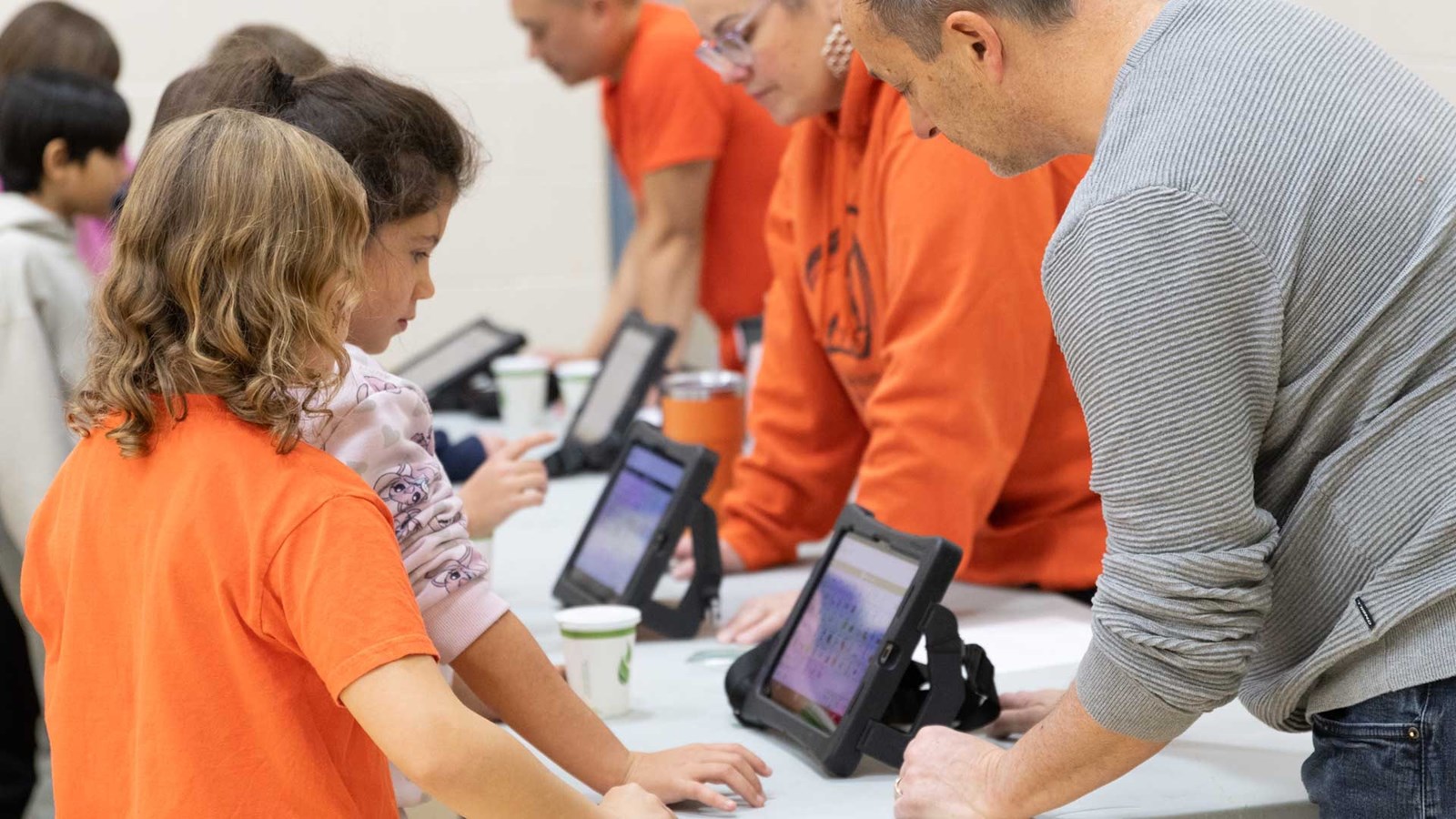 From left to right as pictured: Kevin Manabat-Fewings (SLP), Alison Petrelli (VP at Robertson), Rico Sabatini (LST at Robertson)Nearby, a snack bar station invites students to use a core board to request items such as popcorn or goldfish, demonstrating how symbol-based communication supports everyday choices.
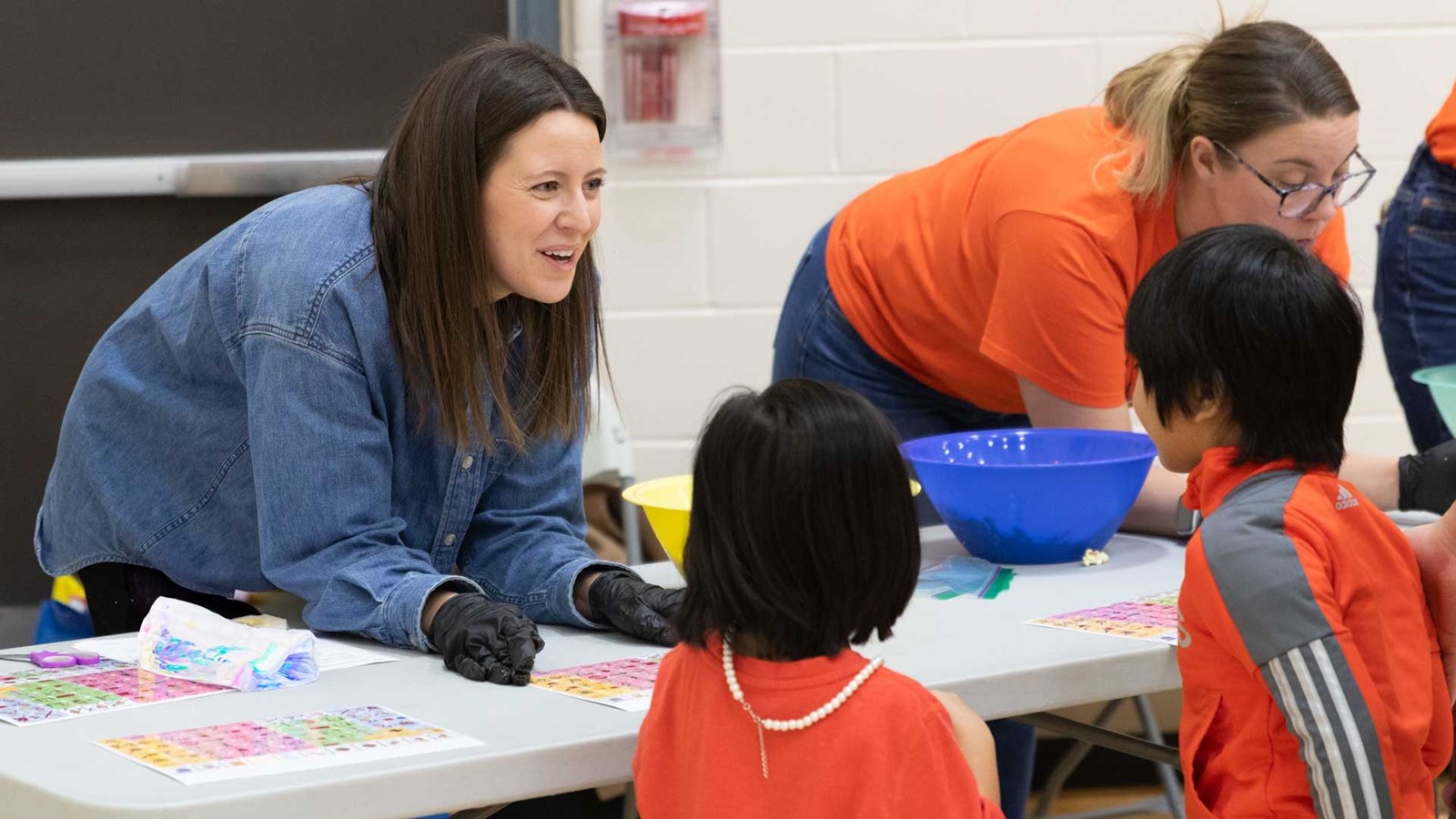 Meghan Little (SLP), Nicole Salo (LST at Robertson)The third and fourth stations highlight eye gaze and sign language. Using an E-tran board, students communicate greetings or emotions using only their eyes, choosing between options such as a wave or emotions like happy or frustrated.
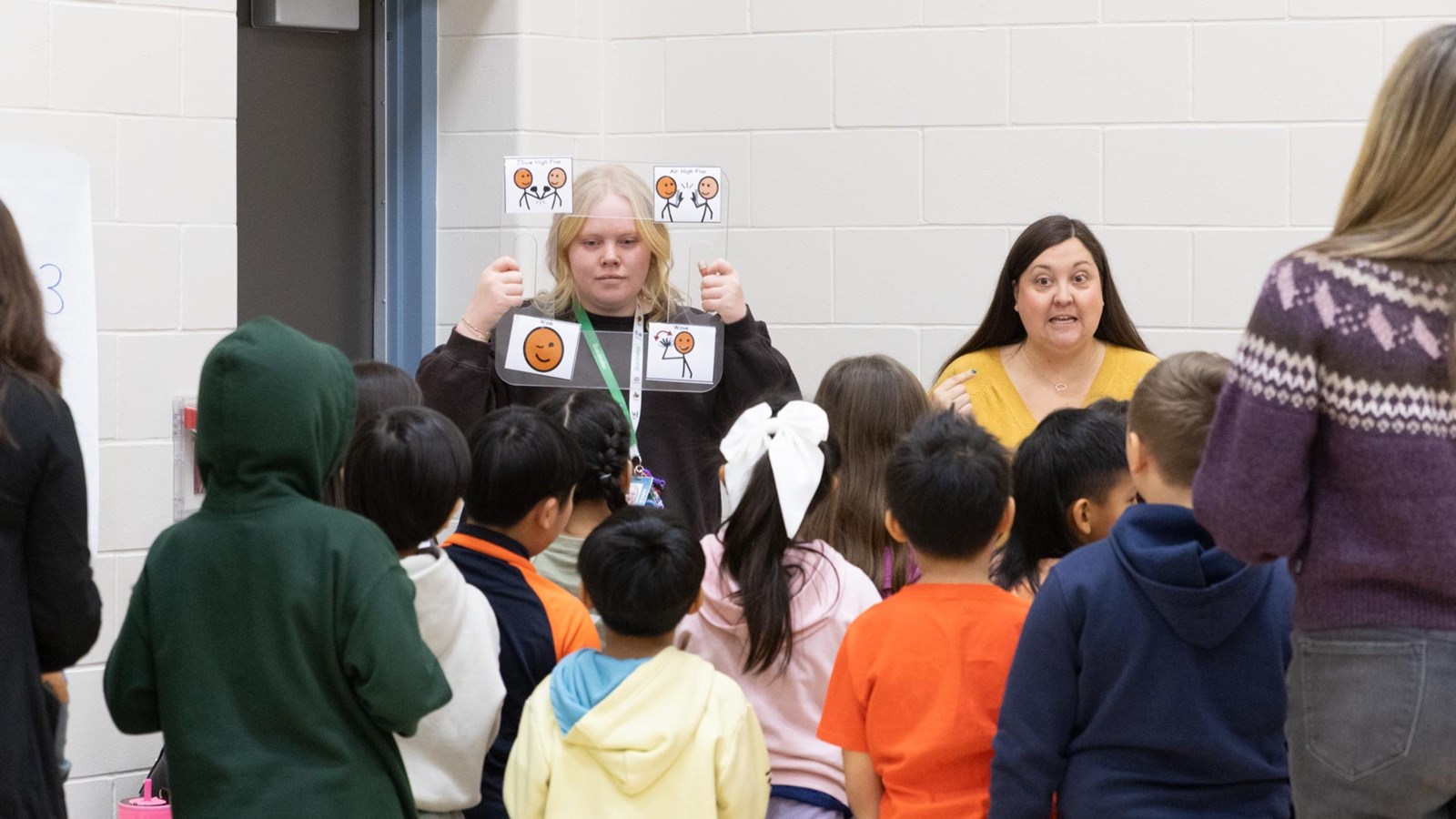 Taylor Bradley and Sunny Giesbrecht (SLPs)The final station introduces sign language, where students practice signing “I want” along with the colour of the candy they would like. Together, the activities show students that communication can take many forms and that each is equally meaningful.
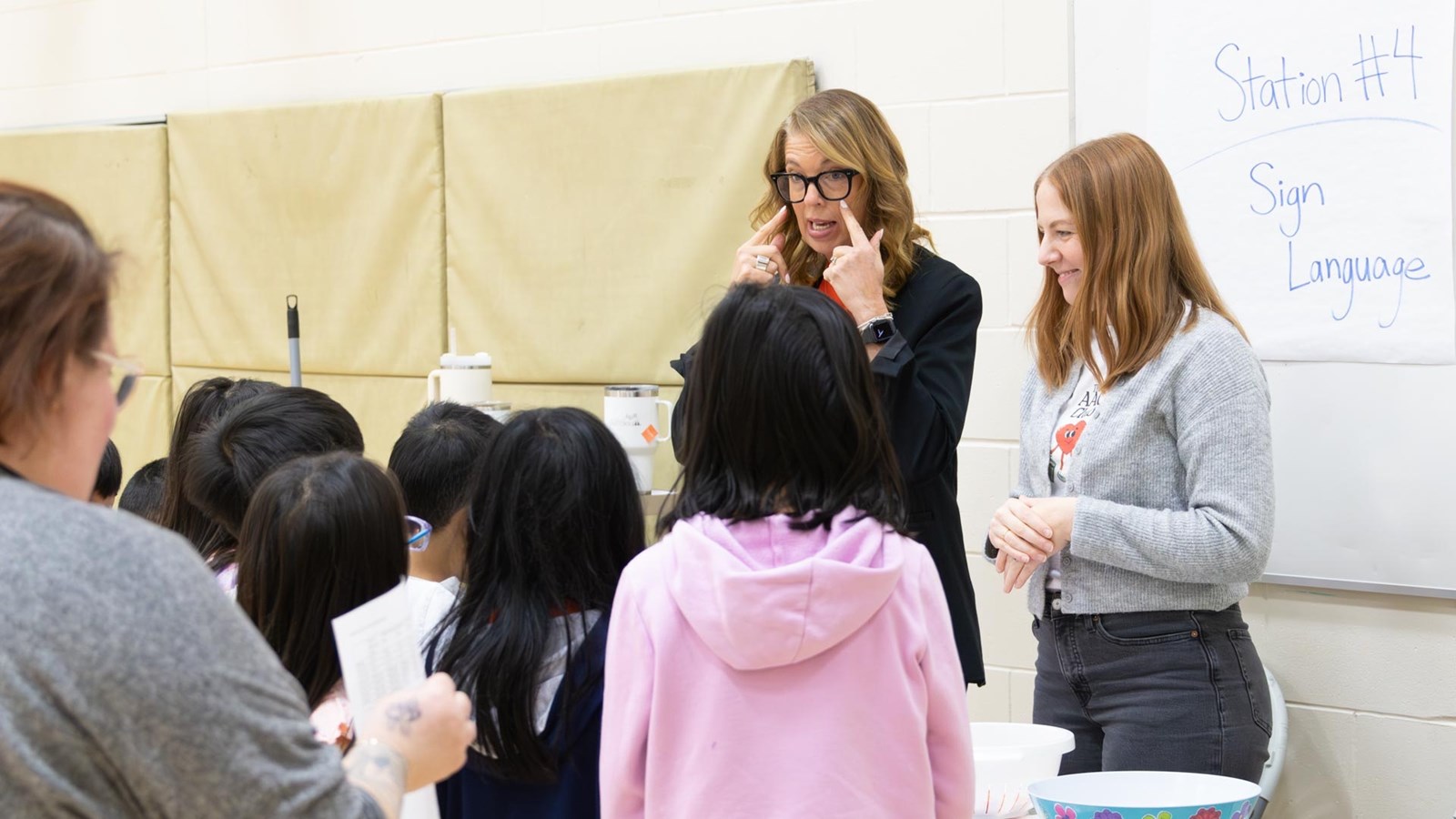 Kristina Ostermann and Cassidy Matthews (SLPs)
Building Understanding Across the Division
Beyond the fun, AAC Awareness Days help students understand how peers communicate, building empathy and reducing uncertainty. Giesbrecht notes that these experiences often lead to greater interest in talkers, core boards, and symbol sets. Students become more willing to explore the tools their classmates use and more confident interacting with AAC systems.
AAC Awareness Days now take place in schools across the division throughout the year with many classrooms and hallways also displaying core word posters permanently. Giesbrecht has noticed more students stopping to point at symbols, practicing simple messages, and showing curiosity about peers’ communication devices.
These small, everyday interactions reflect the broader goal of the initiative: encouraging understanding and strengthening inclusion in WSD schools.

