Elmwood Students Look to Future with Black History
April 4, 2022
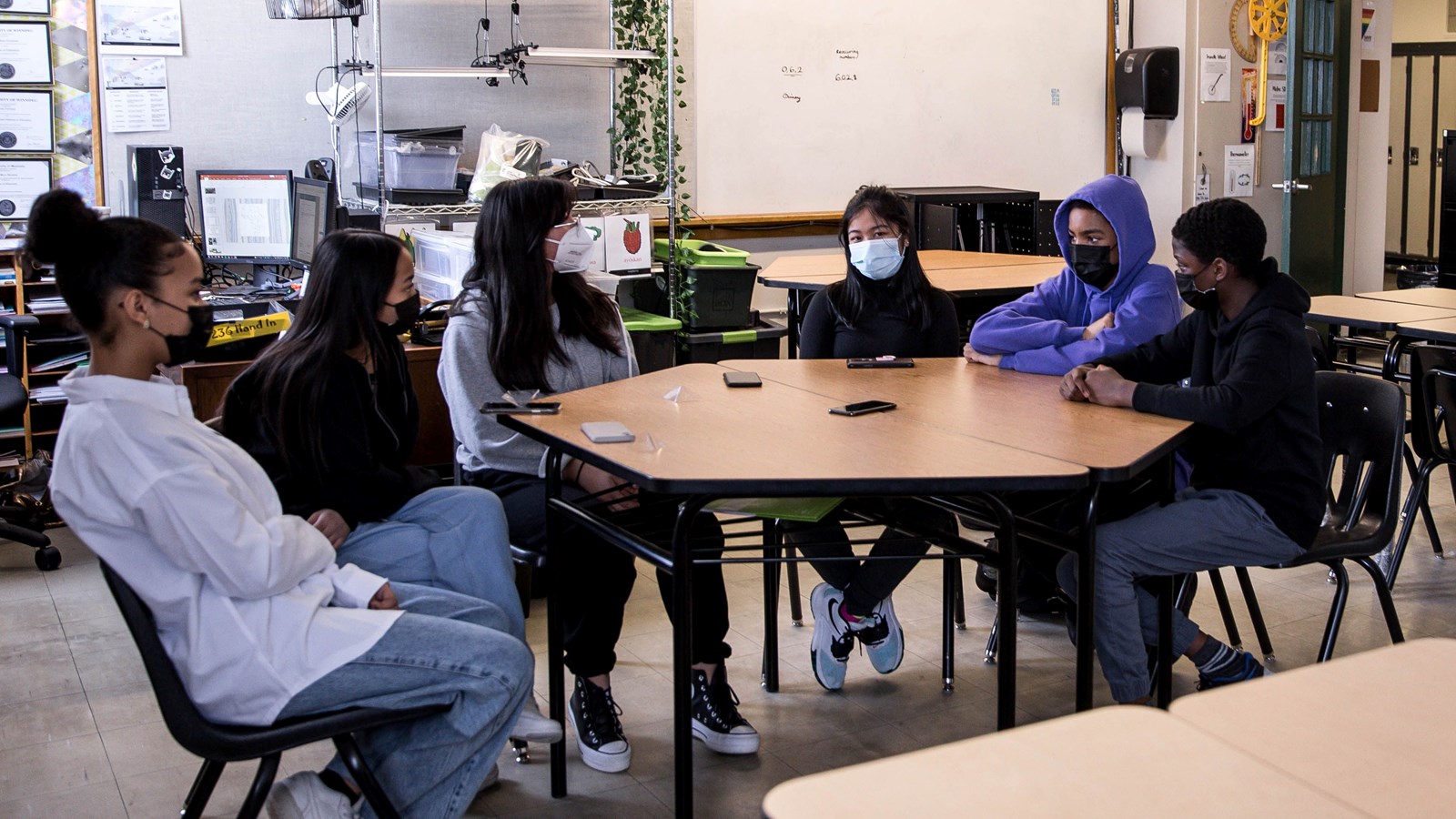
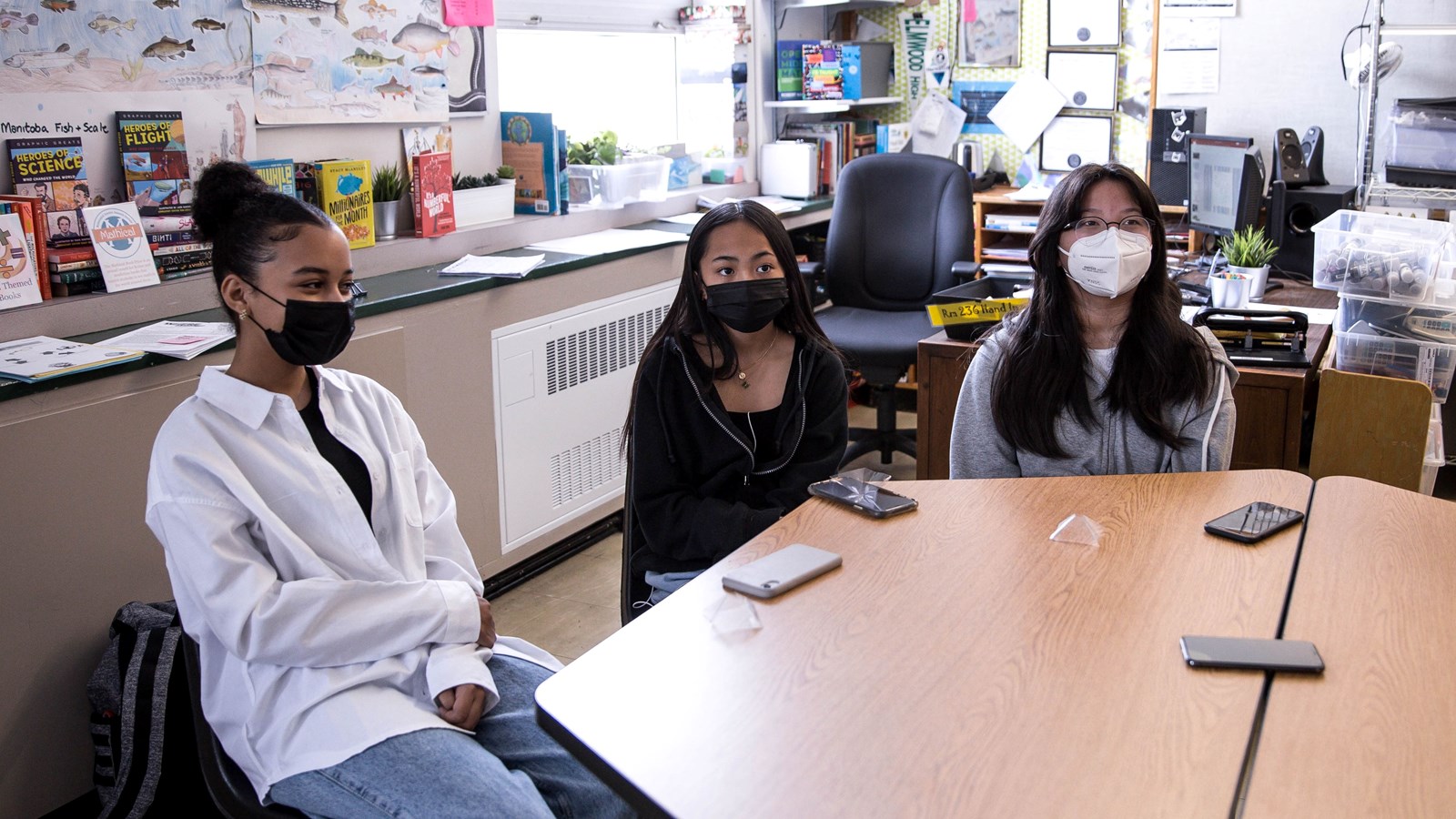
Students at Elmwood High School are connecting Math and Science to Black History.
Math and Science Teacher Jenna Forslund and her students explored the movement of Afrofuturism, which blends elements of science fiction and fantasy with Black history to reimagine the past, present, and future.
“Connecting social justice issues in Math and Science are not as readily available as in the Humanities, but I was proud my class was able to do a mini- exploration,” Forslund said.
One popular example of Afrofuturism is the Marvel Comic character and film Black Panther, which drew many historical inspirations from what happened in the Congo in the 1960s.
“In the 1960s, there was a lot of war and production of nuclear weapons. Wakanda represents the Congo,” said one, student, Jemima. “In the Congo, Uranium was mined as a mineral for conflict; vibranium in Black Panther represents Uranium. Wakanda in the present day would represent the possible future of the Congo if Uranium weren’t used for nuclear weapons but rather technology.”
Students also learned about different technologies in Black Panther, such as holograms and spacecraft, which were created by using Vibranium. Forslund used the concept of holograms to segue into math and science topics. Students created animations and PepperGrams to explore ideas in STEM.
PepperGrams are simple hologram projections. Students first created a 3D video animation in Adobe Photoshop, and then reflected the video on a 4-sided pyramid made of semi-reflective and transparent material. The reflection produces several images that can be viewed at all 360-degree angles.
“We talked about different science concepts such as the law of reflection to make the PepperGrams,” Forslund said.
Students reflected on what they learned from the mini-exploration of Afrofuturism.
“In other classes, we watched videos, learnt about the past and the pain. In math and science, we talked about positive aspects. It’s important to talk about the positive aspects because the negative can get overwhelming,” said one student, Beliz.
“Black people can do more. The past was negative, but we can do better and make the future positive,” added another student, Ameer.
Forslund said there are many creative ways in which math and science teachers can incorporate social issues and history in their classrooms: “There are ways to implement social issues into your math and science classes, you just have to look for them.”